Monthly Report: Disinformation Trends and Social Media Monitoring in Ethiopia
(March 1–31, 2026)
Compiled By
MFC Team
MultiFact Check, Inc (MFC)
April 05, 2026
Addis Ababa
Executive Summary
March 2026 marked a critical escalation in Ethiopia’s digital information environment, driven by the convergence of pre-election dynamics, regional geopolitical tensions, and increasing technological sophistication in disinformation tactics. As the country approaches the 7th General Election scheduled for June 2026, social media platforms have become central arenas for narrative shaping, political contestation, and coordinated influence operations.
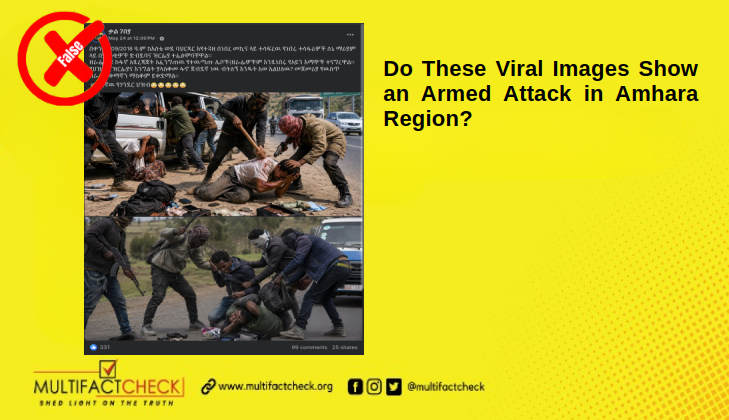
A total of 584 instances of disinformation were identified during the reporting period, a notable increase from previous months. This surge was primarily driven by the rapid proliferation of AI-generated visual content, which has significantly lowered the barrier to producing convincing false narratives. Fabricated imagery – particularly related to military activity and political actors – emerged as the dominant disinformation format, accounting for more than half of all recorded cases.
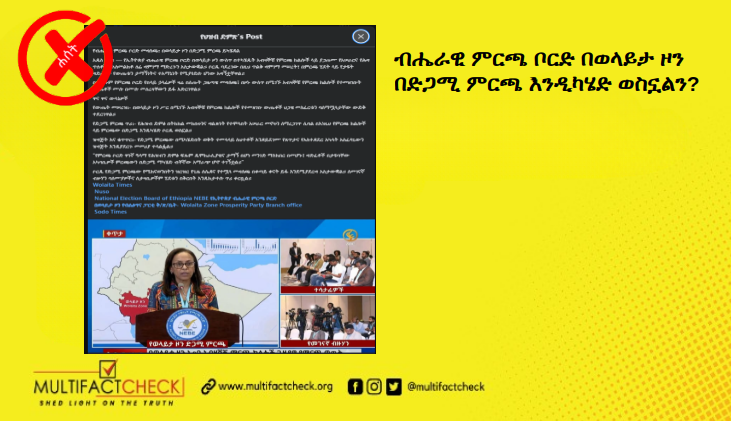
The reporting period was marked by heightened public sensitivity to geopolitical developments, especially tensions involving Eritrea and Sudan. These were frequently exploited to amplify unverified claims of military confrontations, fostering a persistent atmosphere of uncertainty. At the domestic level, electoral ambiguity – particularly around National Election Board of Ethiopia (NEBE) regulations and candidate eligibility – created information gaps that were actively leveraged to undermine institutional credibility.
Humanitarian crises, including the devastating landslides in the Gamo Zone, were weaponized through “false context” narratives, in which unrelated or outdated footage was repurposed to exaggerate the scale of events and provoke emotional reactions. Internal political developments – such as leadership changes within opposition parties – fueled speculative and often polarizing discourse online.
Platform analysis indicates that Facebook remains the primary vector for disinformation dissemination, accounting for 42.8% of identified cases, followed by X (Twitter) and TikTok, each at 25.7%. The continued dominance of individual users as primary sources underscores the decentralized nature of the threat, even as more sophisticated tactics – such as AI-assisted manipulation – become increasingly accessible.
Overall, March 2026 reflects a transition from opportunistic misinformation to a more structured and technologically enabled disinformation ecosystem. As Ethiopia moves closer to the election, the risks of coordinated narrative manipulation, identity-based polarization, and institutional delegitimization are expected to intensify. Strengthening public digital literacy, improving platform accountability in Ethiopian languages, and reinforcing independent fact-checking capacity remain critical to safeguarding information integrity in the months ahead.