

By Naol Kenie
Claim
Viral images circulating on social media platforms, specifically X, TikTok, and Facebook, feature soldiers carrying military devices, claiming that the Amhara Fano forces are now equipped with anti-drone weapons.
Verdict
False. The images are AI-generated and do not show Fano forces equipped with actual anti-drone weaponry.

How the Claim Spread
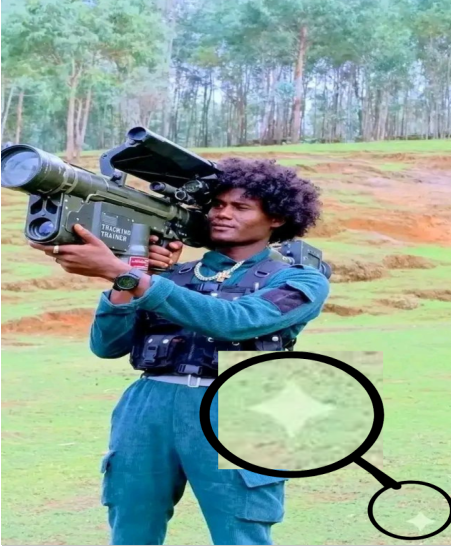
Starting from March 17, 2024, two images began circulating widely across Facebook, TikTok, and X. The posts feature two men carrying large military-style devices. Common Amharic captions accompanying these posts include: “It’s in our hands. Victory is with Amhara Fano”, “The anti-drone weapon is in our hands”, and “Fano is equipped with the FIM-92 Stinger”.

Investigation and Findings
MFC reviewed the claim using both manual visual inspection and digital verification tools. Our analysis confirms that the images are digitally fabricated.
Manual Image Analysis
There are three primary indicators that these images are not authentic:
1. AI Watermarks:
Both images contain a distinct “sparkle/star” icon in the bottom-right corner, which is the official watermark for Google’s Gemini AI image generator.
2. Unrealistic Weapon Design:
The device depicted is a fictitious, generic design labeled with nonsensical text like “TRACKING TRAINER.” It does not match the specifications of a FIM-92 Stinger or any known man-portable air-defense system (MANPADS) used by modern infantry.
3. Visual Distortions:
The facial features appear unnaturally smooth, and the hands exhibit “rubbery” textures and anatomical inconsistencies typical of AI-generated content.
Tool-Based Verification
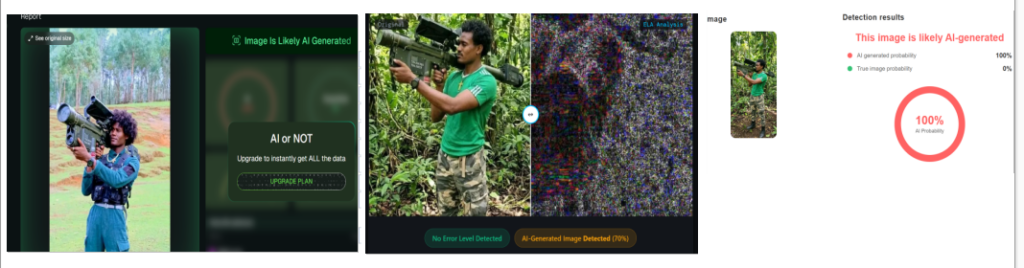
In addition to manual checks, MFC processed the images through AI-detection tools, including “AI or Not” and Fake Image Detector. The tools corroborated our findings, indicating a high probability that the images were generated by artificial intelligence.
Context
Against the backdrop of recent military developments in the Amhara region and broader geopolitical tensions in the Middle East, the acquisition of modern weaponry has become a central theme in Ethiopian media discourse.
When reflecting on the 2020–2022 conflict in Northern Ethiopia between the Federal Government and TPLF forces, many analysts point to drone technology as the primary factor that tipped the scales of power. The Federal Government’s strategic use of drones during that war is widely credited with shifting the military balance in its favor.
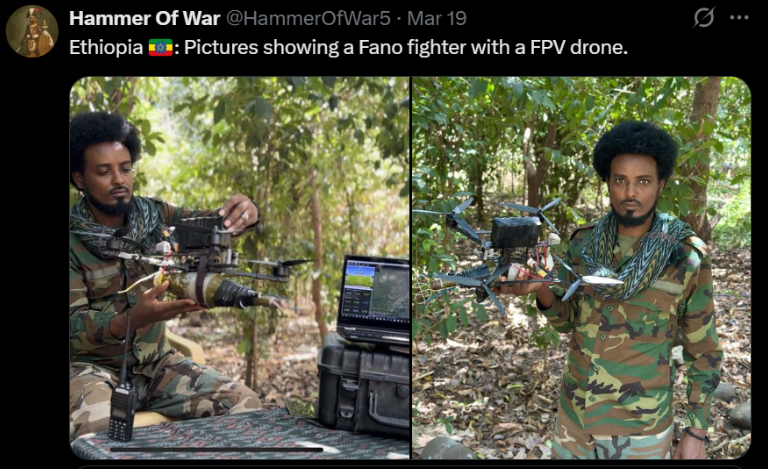
Similarly, in recent Middle Eastern conflicts, reports of drone usage by various regional actors have sparked intense discussions across Ethiopian social media. In this environment, notable Fano officials have recently appeared in videos showcasing FPV drones, claiming they were “produced locally through grassroots efforts”.
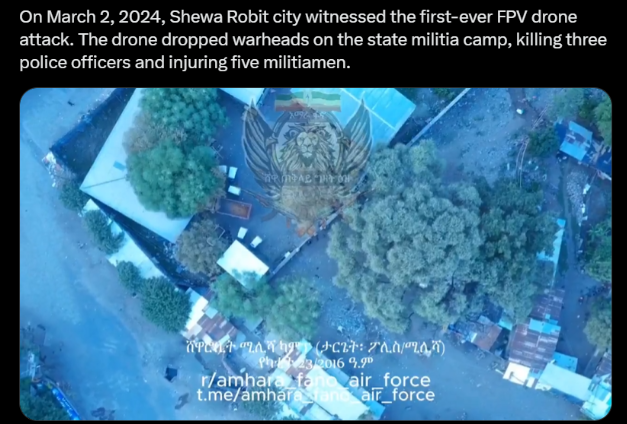
Shortly after these appearances, video footage began circulating showing explosives being dropped on military targets. Many captions accompanying these videos claimed that Amhara Fano forces had officially begun deploying FPV drones in Northern Ethiopia, with some specifically citing an attack in Shewa Robit on March 2, 2024, as the first confirmed use.
Furthermore, members of the diaspora community, known as “London Fano,” shared a video featuring an individual promoting portable anti-drone equipment intended for Fano forces.

These collective digital narratives demonstrate how modern military hardware has become a high-priority agenda for those following the Ethiopian armed struggle. The AI-generated images identified in this claim were digitally manufactured and shared specifically to exploit this existing context.
Conclusion
Based on our manual and tool-based investigation, the images claiming to show Fano forces with anti-drone weaponry are AI-generated fabrications. Therefore, MFC rates this claim as False.
Consequently, MFC strongly advise the public to exercise caution and utilize fact-checking resources to verify the authenticity of viral images before sharing them, as AI-generated misinformation is increasingly used to influence public perception during conflicts.