
By Naol Kenie
Claim
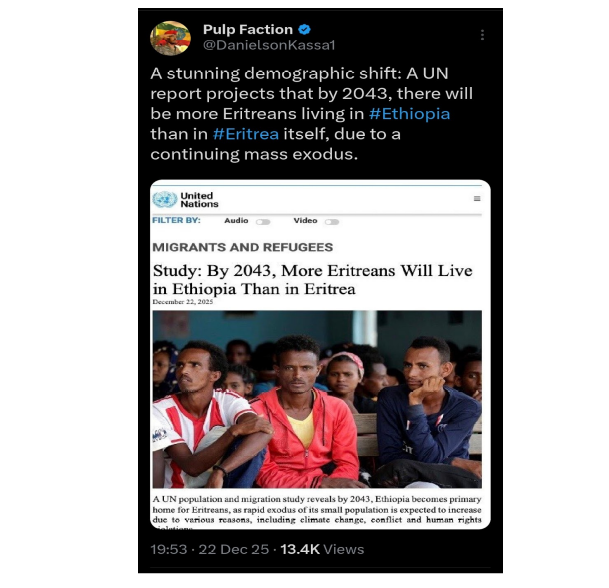
A viral post circulating on the social media platform X features a screenshot of what is purported to be an official United Nations (UN) report. The post claims that a UN demographic analysis predicts a “stunning shift” by the year 2043, asserting that more Eritrean nationals will reside within Ethiopia than in Eritrea itself. The post attributes this alleged shift to a continuous and accelerating “mass exodus” from Eritrea.
Verdict
False. The information presented in both the screenshot and the accompanying caption is entirely fabricated. No such report or demographic forecast has been issued by any United Nations agency.
How the Claim Spread
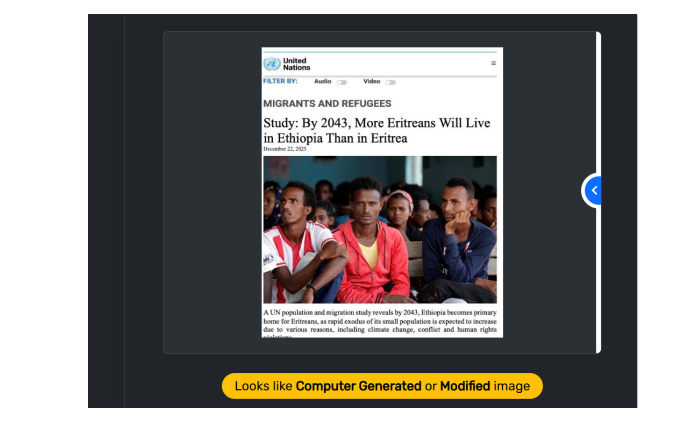
On December 22, 2025, an X account named Pulp Faction shared the screenshot. The image appeared to show a UN article under “Migrants and Refugees.” The headline read: “Study: By 2043, More Eritreans Will Live in Ethiopia Than in Eritrea.” A cover photo showed Eritrean youths inside a refugee camp.
The lead text claimed a UN population study predicted large-scale migration. It cited climate change, conflict, and human rights violations.
Meanwhile, the caption framed the claim as a “stunning demographic shift.” The post gained over 13,000 views and hundreds of interactions. Soon after, other accounts reshared the image with similar captions.
Investigation and Findings
MFC reviewed the claim using visual inspection and verification tools. First, we examined the screenshot manually. Next, we analyzed it with a fake image detection tool. Both methods raised serious red flags.
Manual Image Analysis
1. Incorrect UN Branding and Layout
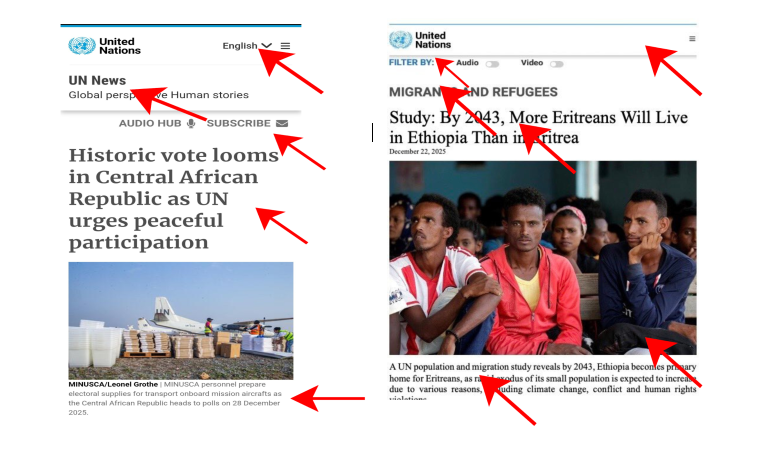
Official UN articles appear under the UN News brand, not just “United Nations” at the top of article pages. They always display the UN News logo text, Language options (EN / FR / AR / etc.), and Social-share icons near the cover image.
However, the screenshot showed a generic “United Nations” header. That layout does not match real UN News pages.
2. Fake and Non-Standard Interface Elements
The image included “Filter by: Audio / Video” toggles. UN News does not place such filters inside articles. Filters appear only on search or index pages, not inside a story page.
3. Missing Author and Department Attribution
UN articles normally list authors or departments. The screenshot contained no such information. That omission strongly suggests fabrication.
4. Sensational and Uncharacteristic Headline Language
“By 2043, More Eritreans Will Live in Ethiopia Than in Eritrea”
UN headlines are cautious, technical, and attribution-heavy. A real UN headline would include: “UN study finds…”, “Report projects that…”. Clear hedging language The phrasing here is absolute and sensational, more typical of social media or opinion blogs.
5. Typography and Formatting Errors
UN News uses a consistent sans-serif type system with:
- Clearly defined headline weights
- Standardized spacing between category, headline, and date
In the screenshot:
- Spacing between category (“MIGRANTS AND REFUGEES”) and headline looks off
- Headline font weight and kerning do not match official UN News styling
- Image caption and a credit line (normally required by UN) are missing
6. No Photo Credit
The UN strictly credits all images. This screenshot listed none. In reality, the photo came from Reuters on November 9, 2017. The photographer was Tiksa Negeri.
Tool-Based Verification
In addition to manual checks, MFC used a fake image detector. The tool indicated computer-generated elements within the image. Furthermore, we searched the UN website directly. No report supports the claim shown in the screenshot.
Context
Migration from Eritrea to Ethiopia increased after Prime Minister Abiy Ahmed came to power in 2018 and signed a peace agreement with Eritrea, ending two decades of hostility between the two countries. The agreement initially raised expectations of freer movement and improved relations, and Ethiopia has since hosted a significant population of Eritrean refugees, many of whom fled indefinite military service and human rights abuses at home.
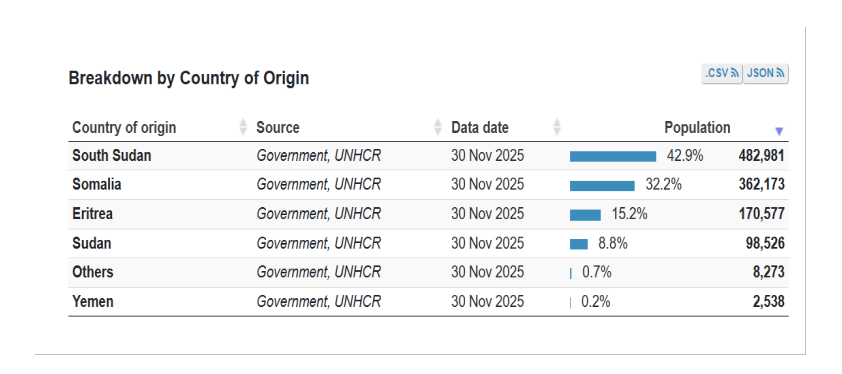
Many Eritreans fled indefinite military service and rights abuses. As a result, Ethiopia hosted a growing refugee population. According to UNHCR data from November 30, 2025, Ethiopia hosts 170,577 Eritrean refugees. The country’s total refugee population exceeds 1.1 million.
However, relations between Eritrea and Ethiopia have worsened again. Debates over Red Sea access have heightened political tensions. This environment makes migration claims easy to manipulate online.
Conclusion
The screenshot claiming a UN projection about Eritrean migration is fabricated. Thorough verification confirms that no such report or demographic shift by 2043 has been issued by any United Nations agency. Therefore, MFC rated the claim as false.
In closing, we strongly advise the public to exercise caution and utilize fact-checking resources to verify the authenticity of viral images and claims before accepting or sharing them.